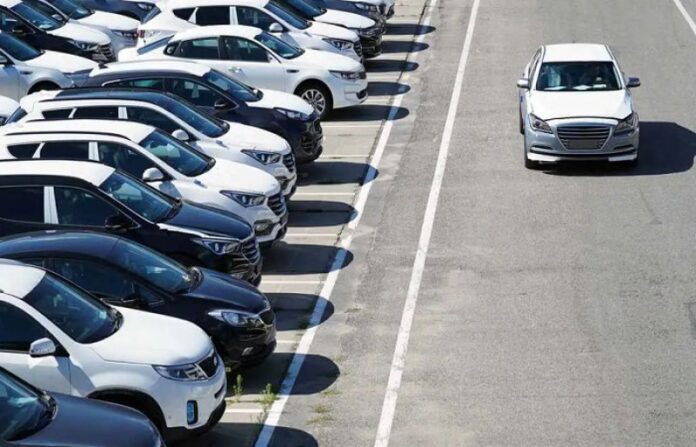
The federal government is reportedly considering the abolition of one of the schemes for importing used cars while proposing stricter regulations for the two remaining schemes.
The Ministry of Commerce has submitted a summary to the Economic Coordination Committee (ECC) of the cabinet, recommending the discontinuation of the Personal Baggage Scheme.
The other two schemes — Transfer of Residence and Gift Scheme — are being proposed for tighter regulation, with measures suggested to curb misuse.
“Different proposals are under consideration to tighten the Gift and Transfer of Residence schemes, while the Baggage Scheme is expected to be abolished. The ECC will take the final decision on this matter,” confirmed senior government sources.
The auto industry has strongly opposed large-scale imports of used vehicles, citing concerns over the potential impact on local manufacturing.
The sector presented data covering December 2024 to October 2025, showing a sharp resurgence in used-car imports during this period.
In contrast, regional peers maintain very limited used-car inflows: India reports virtually zero imports, Vietnam stands at 0.3%, and Thailand at 1.2%.
The industry argues that such restrictions are intended to protect domestic automotive value chains.
Pakistan has taken a different approach. After Notification 1895 issued by the Ministry of Commerce on September 30, 2025, imports of vehicles up to five years old were permitted.
Reports indicate that after June 2026, this age limit may be removed entirely, potentially opening the market to large-scale inflows of aged vehicles.
The local auto industry is a key contributor to the economy, comprising roughly 1,200 factories, providing 2.5 million jobs, generating Rs500 billion annually in government revenue, and attracting approximately $5 billion in foreign investment.
“Import-friendly policies risk diluting these gains at a time when industrial revival and localisation are declared priorities,” said Shehryar Qadir, Senior Vice Chairman of the Pakistan Association of Automotive Parts & Accessories Manufacturers (PAAPAM).
Of the 45,758 vehicles imported into Pakistan between December 2024 and October 2025, nearly 99% came from Japan, which aligns with local right-hand-drive standards.
Other countries contributed minimal numbers: Thailand (130 units), the US (55), Jamaica (49), Germany (47), Australia (22), China (20), and the UAE (5).
The industry estimates that local vendors faced losses of roughly Rs50 billion during this period.
The impact on foreign exchange is also significant: while documented banking-channel imports for local manufacturers cost around $10,138 per vehicle, used-car importers reportedly spend about $14,010 per unit, much of it through informal channels.
While the government is drafting a new Auto Policy to strengthen domestic manufacturing, stakeholders remain split on whether localisation efforts can succeed alongside a liberal used-car import regime.
The data suggests that Pakistan is an outlier among manufacturing economies — both in policy direction and market outcome.